
Nissan Qashqai Four-Star ANCAP Safety Rating: What Brisbane Buyers Need to Know
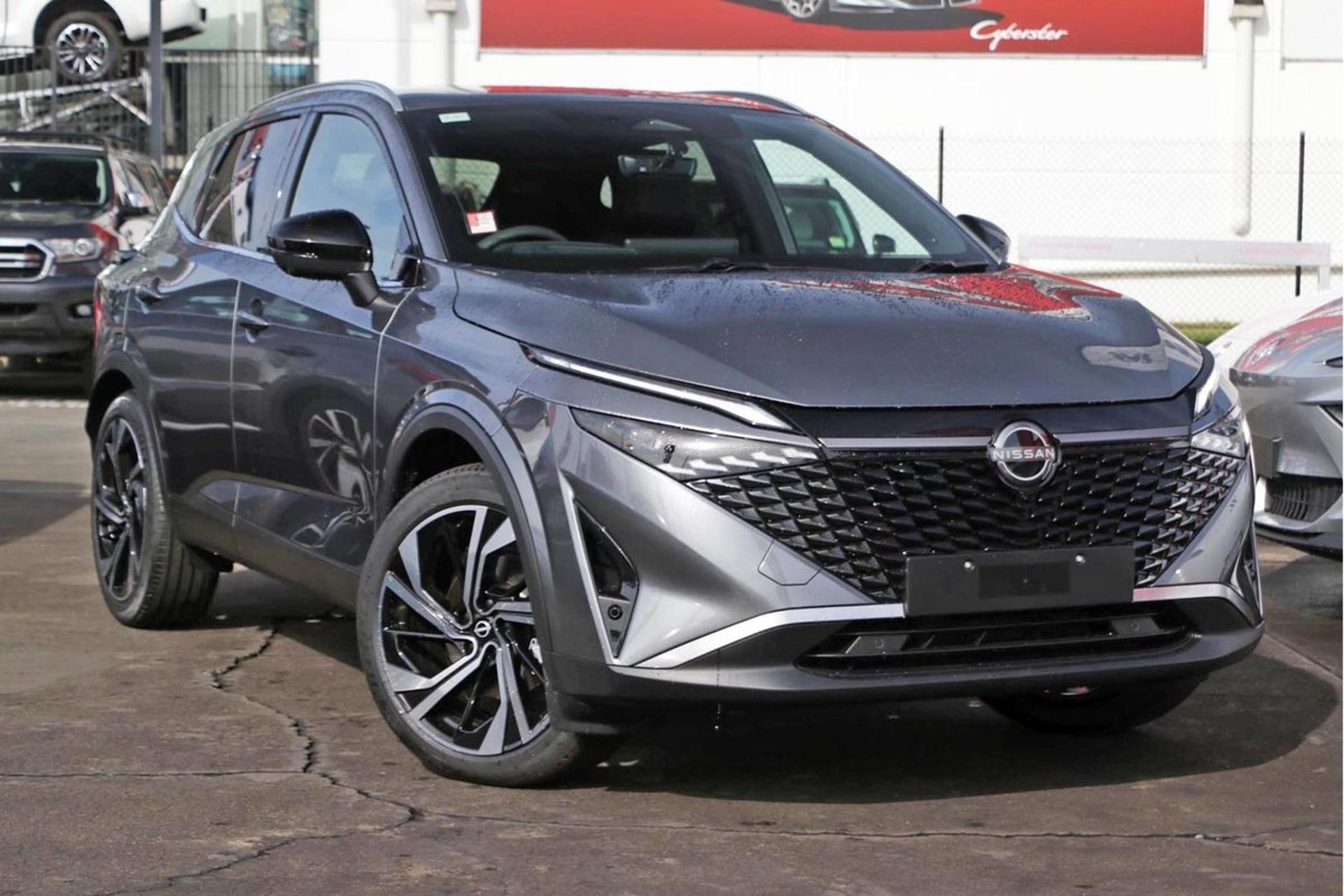
Vehicle Safety & Technology | Barton's Nissan
The Nissan Qashqai e-POWER holds a four-star ANCAP safety rating under the current 2023-2025 assessment criteria. Published in April 2026, this rating applies to all Qashqai e-POWER variants built from November 2025 onwards (VIN SJNJ12***A2261759 onwards), on sale from March 2026.
This is an important result to understand clearly. The Qashqai was previously rated five stars under ANCAP's earlier 2020-2022 criteria, based on 2021 testing. The 2025 reassessment under current, more demanding criteria has returned a four-star result. As ANCAP CEO Carla Hoorweg noted, achieving five stars under the current criteria requires strong and balanced results across every category, rather than isolated strengths.
Critical build date note: This four-star rating applies to Qashqai vehicles built from November 2025 (VIN SJNJ12***A2261759 onwards). Qashqai vehicles built before November 2025 carry the earlier five-star rating under the older criteria. The vehicles look identical. If you are considering a pre-November 2025 vehicle, ask our team to confirm the build date and which rating applies.
At Barton's Motor Group, we believe Queensland buyers deserve the complete picture. Here is what every category in the current rating means.
What is an ANCAP Safety Rating?
ANCAP independently crash-tests and rates new vehicles sold in Australia and New Zealand. Ratings run from zero to five stars. ANCAP assessments have become progressively more demanding over time, such that a result that earned five stars under older criteria may earn fewer stars when reassessed under current protocols. This is by design, and ANCAP's criteria evolve to reflect improvements in vehicle safety technology across the market.
ANCAP assesses four key categories: Adult Occupant Protection, Child Occupant Protection, Vulnerable Road User Protection, and Safety Assist.
Nissan Qashqai ANCAP Safety Rating: The Full Scorecard
The Nissan Qashqai e-POWER (J12 series, built from November 2025) achieved the following results under 2023-2025 criteria:
| Category | Score | Rating |
|---|---|---|
| Adult Occupant Protection | 31.39 / 40 | 78% |
| Child Occupant Protection | 44.78 / 49 | 91% |
| Vulnerable Road User Protection | 43.29 / 63 | 68% |
| Safety Assist | 11.33 / 18 | 62% |
The rating applies to all four variants sold in Australia and New Zealand. It expires December 2031.
| Variant | Powertrain | Drivetrain |
|---|---|---|
| Nissan Qashqai ST-L e-POWER | 1.5L hybrid | FWD |
| Nissan Qashqai Ti e-POWER | 1.5L hybrid | FWD |
| Nissan Qashqai Ti-L e-POWER | 1.5L hybrid | FWD |
| Nissan Qashqai N-Design e-POWER | 1.5L hybrid | FWD |
Adult Occupant Protection: 78% (31.39 out of 40)
The passenger compartment remained stable in the frontal offset test. The driver received adequate protection for the chest and lower legs, with good results across all other body regions. The front passenger received good protection throughout. The compatibility penalty was 3.08 points.
In the full-width frontal test, driver chest protection was adequate. Rear passenger chest protection was marginal (1.62 out of 4), a notably weak result for a rear seat passenger in a heavy frontal impact.
The side impact scored the maximum 6.00 out of 6 points, with good protection across all critical body regions. The oblique pole returned 5.89 out of 6. Whiplash scored 3.82 out of 4.
The far-side impact scored only 2.50 out of 4 points. The centre airbag is fitted, but Nissan did not provide information to demonstrate its performance was robust and symmetrical, resulting in a penalty. Rescue and extrication scored 0.17 out of 4, with no multi-collision braking system is fitted, a 1.00-point door extrication deduction was applied, and window submergence was not demonstrated. No eCall system is fitted (0.67 default only).
Child Occupant Protection: 91% (44.78 out of 49)
Child occupant protection is the Qashqai's outstanding result. At 91 per cent, it is the highest child occupant score of any vehicle in the Bartons ANCAP content series across all brands. For families, this is genuinely significant.
The frontal offset test scored 15.78 out of 16, with good protection for all critical body regions of both dummies (ten-year-old dummy neck rated adequate). The side impact earned the maximum 8.00 out of 8 points.
The restraint installation assessment scored the full 12.00 out of 12 points. All assessed child restraint types can be correctly installed in all rear seating positions without issue. ISOFix lower anchorages and top tether anchorages are fitted across all rear positions. No child presence detection system is available.
Vulnerable Road User Protection: 68% (43.29 out of 63)
The bonnet and windscreen provided good or adequate head protection to pedestrians over most of the surface, with marginal and poor results at the stiff windscreen pillars, the base of the windscreen, and the front edge of the bonnet. Pelvis, femur, and lower leg physical protection were mixed, with areas ranging from good to weak (pelvis 2.65/4.5, femur 2.22/4.5, knee and tibia 7.33/9). These physical impact results are the primary driver of the 68 per cent VRU score.
Forward pedestrian AEB was rated good in most scenarios (5.59 out of 7). AEB Backover was rated good, earning the full 2.00 out of 2 points, a standout result. Cyclist AEB was adequate but does not react in turning scenarios, and no cyclist dooring alert of any kind is provided. Motorcyclist AEB in forward straight-line scenarios was good, but turning scenarios were rated poor (2.50 out of 6 overall). Lane support in car-to-motorcyclist emergency lane keeping earned the full 3.00 out of 3 points.
Safety Assist: 62% (11.33 out of 18)
The 62 per cent Safety Assist score reflects specific system capability gaps that buyers should understand clearly.
Car-to-car AEB (5-130 km/h) earned good performance across all four standard car-to-car scenarios (3.75 out of 4). AEB Junction was good.
AEB Crossing: the system does not react when crossing into the path of another vehicle. Tests were not conducted; the result is zero points. AEB Head-On: the system does not react in head-on scenarios. Zero points. These two gaps together account for most of the Safety Assist shortfall.
The lane support system earned the full 3.00 out of 3 points, operating from 60 to 250 km/h. iACC is standard with camera-based speed sign recognition. Speed assistance scored 2.33 out of 3. The driver monitoring system scored 0.25 out of 2, with only indirect drowsiness monitoring is fitted, with no distraction detection available. Seat belt reminders scored the full 1.00 out of 1.
Nissan Qashqai Safety Features: What Comes Standard
- Dual frontal, side chest, side head curtain, and centre airbags (symmetry penalty applied)
- AEB: car-to-car (5-130 km/h), pedestrian forward, AEB Backover (good), cyclist (adequate; no turning), motorcyclist (forward good; turning poor)
- AEB Junction (good); no AEB Crossing capability; no AEB Head-On capability
- Lane keep assist and emergency lane keeping (60-250 km/h)
- Lane departure warning, forward collision warning, blind spot monitoring
- iACC, camera-based speed sign recognition, manual speed limiter
- Indirect driver drowsiness monitoring (fatigue only; no distraction detection)
- Seat belt reminders with occupancy detection (all positions)
- ISOFix and top tether anchorages
Not fitted: Multi-collision braking, eCall, AEB Crossing, AEB Head-On, cyclist dooring alert, child presence detection, direct DMS.
Understanding the Four-Star Rating in Context
The Qashqai's four-star result under current criteria reflects how ANCAP's standards have evolved. The vehicle still performs exceptionally for child occupant protection, with the highest child occupant score in this content series at 91 per cent and a perfect restraint installation result. Car-to-car AEB and lane support also return strong individual results.
The areas that pull the overall result below five stars are the VRU physical impact scores, the absence of AEB Crossing and AEB Head-On capability, and the limited driver monitoring system.
For families prioritising child safety above all else, the Qashqai's child occupant result is exceptional and remains genuinely competitive. For buyers prioritising a balanced result across all four categories, the full scorecard above provides the complete picture.
Our team at Barton's Motor Group is happy to walk through any of these findings.
Browse current Nissan Qashqai stock at Bartons.net.au.
Nissan Qashqai For Sale in Brisbane
All safety scores, test results, and feature listings are drawn from the official ANCAP assessment report for the Nissan Qashqai (J12 series, March 2026 onwards), published April 2026. This is a four-star rating under 2023-2025 criteria. A five-star rating under the previous 2020-2022 criteria applies to variants built before November 2025. Rating applies to Australian and New Zealand market variants built from November 2025 (VIN SJNJ12***A2261759 onwards). Source: ancap.com.au.