
XPENG G6 Five-Star ANCAP Safety Rating: What Brisbane Buyers Need to Know
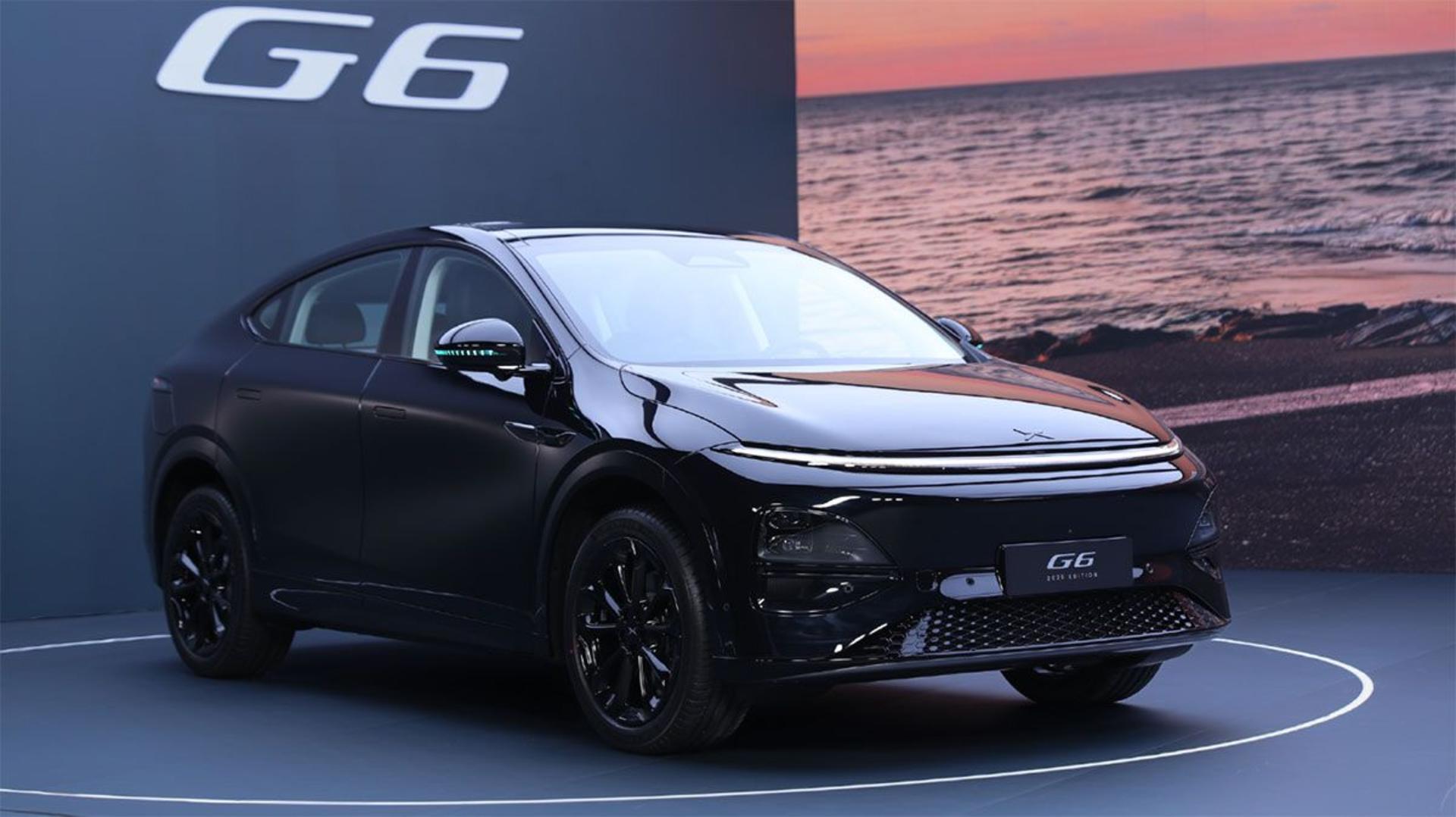
Vehicle Safety & Technology | Wynnum XPENG
The XPENG G6 has earned a five-star ANCAP safety rating (the highest possible result) under the 2023-2025 assessment criteria. Introduced to Australia in October 2024, the G6 is a battery-electric small SUV available in two variants. The rating was published in December 2024 and updated in December 2025, applying to all variants built from July 2024 onwards.
With perfect scores in both the side impact and oblique pole tests, and an Adult Occupant Protection result of 88 per cent, the G6 is a strong performer overall. As with every ANCAP article we publish at Barton Motor Group, the complete picture is here, including the specific findings buyers should understand before purchase.
What is an ANCAP Safety Rating?
ANCAP independently crash-tests and rates new vehicles sold in Australia and New Zealand at accredited facilities, completely separate from manufacturer safety claims. A five-star rating is the highest result achievable.
ANCAP assesses four key categories: Adult Occupant Protection, Child Occupant Protection, Vulnerable Road User Protection, and Safety Assist.
XPENG G6 ANCAP Safety Rating: The Full Scorecard
The XPENG G6 (built from July 2024) achieved the following results under 2023-2025 criteria:
| Category | Score | Rating |
|---|---|---|
| Adult Occupant Protection | 35.49 / 40 | 88% |
| Child Occupant Protection | 42.62 / 49 | 86% |
| Vulnerable Road User Protection | 51.50 / 63 | 81% |
| Safety Assist | 14.49 / 18 | 80% |
The rating applies to both variants sold in Australia and New Zealand, built from July 2024 onwards. It expires December 2031.
| Variant | Powertrain | Drivetrain |
|---|---|---|
| XPENG G6 Standard Range | BEV | RWD |
| XPENG G6 Long Range | BEV | RWD |
Adult Occupant Protection: 88% (35.49 out of 40)
What the Results Show
The passenger compartment remained stable in the frontal offset test, with no deductions applied. The driver received adequate lower leg protection, with good results across all other body regions. The front passenger received good protection throughout. The compatibility penalty was a modest 1.57 points, one of the lower penalties in this content series, indicating the G6 presents a comparatively low risk to occupants of an oncoming vehicle.
In the full-width frontal test, driver chest protection was adequate. Rear passenger chest protection was rated weak(0.99 out of 4), a result worth noting for anyone regularly carrying rear seat passengers.
The side impact and oblique pole tests were both exceptional, with the G6 scoring the maximum available points in both tests.
The far-side impact result requires specific disclosure. The G6 is fitted with a centre airbag, but during testing it did not prevent contact between the two dummies and was therefore assessed as poor. This resulted in a penalty and a far-side impact score of only 2.69 out of 4, lower than most other vehicles in this content series. Excursion prevention itself was rated adequate in both the vehicle-to-vehicle and vehicle-to-pole scenarios; the penalty specifically relates to the centre airbag's performance in preventing occupant-to-occupant contact.
The rescue and extrication score was a strong 3.00 out of 4. Both doors and windows passed submergence testing, a complete result for a battery-electric vehicle. An eCall system is fitted and scored 1.00 point. Multi-collision braking is also fitted, scoring 1.00 point.
Child Occupant Protection: 86% (42.62 out of 49)
What the Results Show
The G6 returned outstanding dynamic crash test results for child occupants. Both the frontal offset and side impact tests scored the maximum available points: 16.00 out of 16 and 8.00 out of 8 respectively, with good protection recorded for all critical body regions of both the six-year and ten-year dummies in both tests.
ISOFix lower anchorages are fitted to both rear outboard seats, with top tether anchorages across all rear positions. The restraint installation assessment scored 11.62 out of 12. Most child restraint types can be installed in most rear positions; however, one of the selected booster seats and one Type B convertible seat in forward-facing mode could not be correctly installed in the centre rear position. Families using either of these restraint types should plan to use the outboard rear seats.
No child presence detection system is available.
Vulnerable Road User Protection: 81% (51.50 out of 63)
Physical Impact Results
The bonnet and windscreen provided good or adequate head protection to pedestrians over most of the surface, with marginal and poor results at the front and rear of the bonnet, the base of the windscreen, and the stiff windscreen pillars. Pelvis and femur protection were mostly weak or poor (1.91 out of 4.5 and 2.07 out of 4.5 respectively), a notable limitation and the primary factor behind the VRU score sitting below the maximum. Lower leg protection was mostly good, with the full 9.00 out of 9 knee and tibia points awarded.
Autonomous Emergency Braking: Pedestrians, Cyclists, and Motorcyclists
The VRU AEB system operates from 4 km/h to 85 km/h in forward scenarios.
Forward pedestrian AEB was rated good, including in reverse (AEB Backover) and turning scenarios, with collisions avoided or mitigated in most tests, scoring 6.84 out of 7. AEB Backover earned the full 2.00 out of 2 points, a perfect result.
Cyclist AEB was rated good, with collisions avoided or mitigated at all test speeds including turning scenarios, scoring 8.25 out of 9. The G6 provides an information alert when a cyclist is approaching from behind, and a warning is also issued, but the warning was not sufficiently early to be awarded points under ANCAP's timing requirements.
Motorcyclist AEB and lane support both earned full marks: 6.00 out of 6 and 3.00 out of 3 respectively, including in turning and overtaking scenarios.
Safety Assist: 80% (14.49 out of 18)
Car-to-Car AEB
The car-to-car AEB system operates from 4 km/h to 150 km/h. Testing returned good performance across all standard car-to-car scenarios (3.75 out of 4). AEB Junction and AEB Crossing combined earned the full 4.00 out of 4 points, a perfect result and a genuine strength, with the system able to autonomously brake when turning across or into the path of an oncoming vehicle.
AEB Head-On was rated marginal, scoring only 0.50 out of 1. This is worth noting for motorway and rural road driving, where head-on collision avoidance is most relevant.
Lane Support System
The lane support system operates from 60 to 150 km/h. Lane keep assist was rated good. Emergency lane keeping was rated adequate in the more critical scenarios, contributing to a combined lane support score of 2.50 out of 3.
Speed Assistance and Driver Monitoring
iACC is standard alongside camera-based speed sign recognition. Speed assistance scored 2.39 out of 3.
A direct driver drowsiness monitoring system detecting both distraction and fatigue is fitted as standard. Despite the direct monitoring capability, the system scored only 0.35 out of 2 points, reflecting performance against ANCAP's full protocol requirements rather than a lack of system capability. Seat belt reminders with occupancy detection for all positions scored the full 1.00 out of 1.
XPENG G6 Safety Features: What Comes Standard
- Dual frontal airbags (driver and front passenger)
- Side chest-protecting airbags (front and second-row seats)
- Side head-protecting curtain airbags (front and second-row seats)
- Centre airbag (rated poor in far-side impact testing)
- Driver and front passenger knee airbags
- AEB: car-to-car (4-150 km/h), pedestrian forward and reverse, cyclist, and motorcyclist
- AEB Junction, Crossing, and Head-On
- Lane keep assist and emergency lane keeping (60-150 km/h)
- Lane departure warning and forward collision warning
- Blind spot monitoring
- iACC, camera-based speed sign recognition
- Direct driver monitoring system (distraction and fatigue)
- Cyclist dooring information alert (warning fitted; not early enough to score)
- Seat belt reminders with occupancy detection (all positions)
- Multi-collision braking
- eCall (fitted)
- ISOFix anchorages (rear outboard) and top tether anchorages (all rear positions)
- Rescue sheet
Not available: child presence detection.
View the Five-Star XPENG G6 at Barton's Motor Group
The XPENG G6's five-star ANCAP result reflects genuine strengths: perfect side impact and oblique pole scores, perfect AEB Junction and Crossing performance, and outstanding child occupant dynamic crash test results. The areas requiring transparency are the centre airbag's poor far-side impact performance, the weak rear passenger chest result, the pelvis and femur physical impact limitations, and the marginal AEB Head-On result. All are disclosed here and in the full ANCAP report.
Visit Barton's Motor Group to see the XPENG G6 in person, arrange a test drive, and speak with our team about the Standard Range and Long Range variants.
Browse current stock and make an enquiry at Bartons.net.au.
XPENG G6 For Sale in Brisbane
All safety scores, test results, and feature listings are drawn directly from the official ANCAP assessment report for the XPENG G6 (October 2024 onwards), published December 2024 and updated December 2025. Rating applies to all Australian and New Zealand market variants built from July 2024 onwards. Source: ancap.com.au.